Choosing Dog Bags for an international assortment takes more than comparing prices and colors. Buyers need to check how each bag performs in ordinary use: a damp walk, a crowded train, or a dog shifting in the back seat. Small details matter. A zipper that catches fur, a strap that slips, or a lining that holds odors can turn an attractive sample into a disappointing product.
For this guide, Maya Chen is a fictional composite sourcing specialist, not a real industry authority. Her illustrative advice is: “Judge Dog Bags by the walk home, not just the product photo.” That is a useful test, though it cannot replace hands-on review. Inspect stitching, closures, material thickness, cleaning instructions, and the comfort of handles or shoulder straps. Test the sample. Check how it holds its shape with a water bottle, treats, and waste bags inside. Ask suppliers about size tolerances, customization, packaging, minimum order quantities, and production timelines. Request clear product specifications, then compare them with the physical sample before placing a larger order. Buyers should also confirm that labeling and product claims fit their destination markets and sales channels. Requirements can vary, so verify details with qualified local sources. No checklist catches everything. A first impression may miss a weak seam or awkward pocket, and that deserves a second look. The ten tips ahead offer a practical framework for asking better questions, comparing suppliers, and selecting Dog Bags that suit real customers—not just a catalog page.
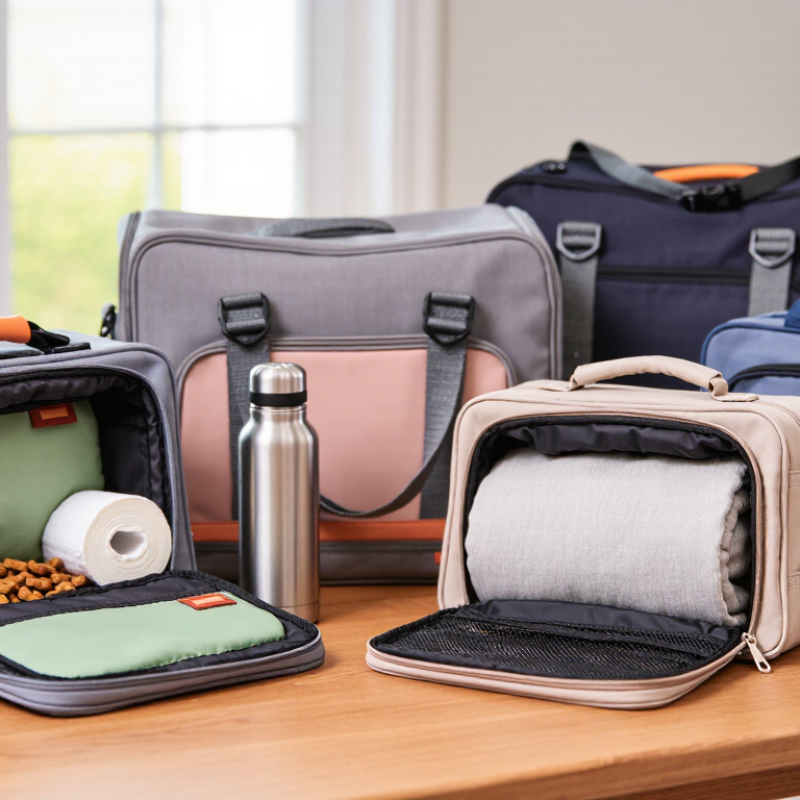
Dog bags are not one interchangeable product. A soft sling keeps a small dog close during short walks, but it can strain one shoulder on a long route. A structured backpack distributes weight more evenly and suits hands-free outings; check that the dog can sit, turn, and breathe comfortably. Wheeled carriers and pet strollers help on longer trips or for dogs with limited mobility. Hard-sided carriers offer more structure for car travel, though size and ventilation still matter.
The American Pet Products Association’s 2023–2024 National Pet Owners Survey estimated that 65.1 million U.S. households owned a dog. This is an ownership figure, not a dog-bag sales statistic, but it shows the scale of potential use cases.
Match the bag to the trip: daily errands, trail walks, or vehicle transport demand different support and access. Measure the dog’s length and seated height, then compare those figures with the maker’s interior dimensions. Fit matters more. A roomy-looking exterior can hide a cramped cabin. I would also test zipper access and cleaning by hand; product photos rarely show where fur and dampness collect. A carrier marketed for travel is not automatically suitable for every airline or vehicle, so verify the relevant requirements before buying.

Choosing a dog bag starts with your dog’s measurements, not the product photo. Measure body length from chest to tail base, then check seated height and the maker’s capacity guidance. A dog’s weight alone can be misleading: a long-bodied dog may need more floor space than a heavier, compact one. Leave enough room to turn around and settle, but avoid a loose interior where your dog slides during travel. Fit matters.
Tips: Place a familiar blanket inside and let your dog explore the open bag at home. Check that mesh panels provide airflow and that seams, zippers, and base support feel sturdy. A quick indoor trial can reveal awkward pressure points before a longer outing.
Choose a carrying style for the trip you actually take. A shoulder bag can work for short walks, while a backpack may distribute weight better over longer distances. Handheld styles are easy to lift but can tire one arm; wheeled options may be cumbersome on stairs or rough paths. Check strap width, handle placement, and your dog’s posture after a few minutes of carrying. There is no perfect option for every outing, and buyers sometimes focus too much on storage pockets. Comfort and stable support matter more.
A dog bag should match the dog’s size, travel habits, and the time spent inside it. Compare materials closely. Dense woven fabric can resist everyday scuffs, while coated surfaces are easier to wipe after muddy paws. Mesh panels improve airflow, but thin mesh may snag or tear under repeated use. Check seams, zippers, and attachment points; these often show wear before the main fabric. No material is perfect.
Tips: Press the base to see whether it stays level under your dog’s weight. Look for smooth interior edges and secure closures that do not press against the dog. Ask for clear dimensions and a stated weight limit, then compare them with your dog’s measured length and weight. Small details matter.
Comfort depends on more than padding. A wide shoulder strap can reduce pressure during a walk, while adjustable straps help keep the bag close to your body. For safety, inspect ventilation openings, leash clips, and openings that prevent accidental escapes without restricting movement. Try a short, supervised test at home. Watch for panting, shifting, or attempts to climb out. A bag may look sturdy online yet feel awkward after ten minutes; that is worth admitting before buying in bulk.
When sourcing dog waste bags, check how they perform in real use, not just how they look in a product sheet. Ask suppliers for material specifications, thickness, seal strength, and test results. A bag should hold its contents without leaking when carried from a park bin to a household trash container. For reusable dispensers, check whether surfaces can be wiped clean and whether parts tolerate routine washing. Small details matter.
Tip: Request samples and test them with damp hands. Check that the roll dispenses smoothly, the perforations separate cleanly, and the tied opening stays secure. A checklist can miss awkward handling. We have to admit that packaging claims alone do not prove durability.
Requirements vary by destination and sales channel. Confirm applicable packaging, labeling, and material rules with local authorities or a qualified compliance professional before placing an order. Keep current supplier declarations and test reports with the purchase records. Check that labels accurately describe material and disposal guidance; avoid claims such as “compostable” unless they are supported by appropriate evidence and accepted in the target market. Clear documentation helps buyers compare suppliers and reduces costly misunderstandings. One market’s accepted wording may not fit another.
A reliable dog bag supplier should explain materials, construction, and production limits clearly. Ask for fabric weight, coating details, zipper type, and tested load capacity. Request close-up photos of seams, handles, and mesh panels, not only styled product shots. Small details matter. A loose stitch near a handle can become a costly problem when bags are filled and lifted repeatedly. Check whether the supplier can keep dimensions and materials consistent across production runs. Clear answers are useful; vague promises are not.
Compare prices using the same specifications. A low unit price may exclude sample fees, custom packaging, or transport to your warehouse. Ask for tiered pricing, minimum order quantity, production time, and payment milestones in writing. Order a physical sample before approving bulk production. Inspect its odor, stitching, zipper movement, lining, and usable interior space. Put a few everyday items inside, then carry it for several minutes. The sample may still differ from the finished order, so request a signed specification sheet and define acceptable tolerances. I sometimes focus too much on appearance; that is easy to regret when a bag feels awkward to carry. Confirm how defects, delays, and changes will be handled before paying a deposit. Keep communication records, and avoid treating a friendly call as a substitute for written terms.
| No. | Buying Tip | What to Evaluate | Questions and Evidence to Request | Decision Signal |
|---|---|---|---|---|
| 1 | Define the bag’s intended use | Specify whether the product is for carrying a dog, transporting supplies, or storing food and accessories. For a carrier, establish the pet size and weight range, ventilation needs, access points, and carrying method. | Share target dimensions, intended load, use environment, and any required features. Ask the supplier to confirm which design details support that use. | Proceed only when the product specification and intended use are clearly aligned. |
| 2 | Check supplier capability | Assess experience with the relevant bag construction, materials, sewing, hardware, and quality control. Confirm whether production is performed in-house or through subcontractors. | Request a factory or production overview, examples of comparable work, quality-control procedures, and a clear description of any subcontracted processes. | Prefer verifiable, product-specific capability over broad claims or polished marketing materials alone. |
| 3 | Compare like-for-like quotations | Compare material composition, dimensions, construction, hardware, packaging, order quantity, and included services. A lower unit price may reflect a different specification or excluded costs. | Ask for a written quotation that itemizes the product specification, unit price, tooling or setup charges, packaging, and any other applicable fees. | Evaluate the total cost for the same specification, not unit price in isolation. |
| 4 | Review minimum order quantities | Confirm the minimum order quantity (MOQ) for each design, size, color, and customization level. Different materials or colors may have separate minimums. | Request MOQ details by product variant and ask whether a pilot order is possible. Confirm whether smaller quantities change the unit price or production lead time. | Make sure the MOQ fits expected demand and the planned product range. |
| 5 | Assess materials and construction | Check fabric type and weight, lining, seams, fasteners, handles, reinforcement, and removable or washable components. Requirements vary by product design and intended load. | Request material specifications and close-up photos of seams and attachment points. For a carrier, ask how ventilation, closures, and load-bearing areas are constructed. | Confirm that the stated materials and construction match the approved product specification. |
| 6 | Order and evaluate samples | Assess dimensions, workmanship, function, color, labeling, packaging, and ease of use. A pre-production sample can help verify the intended design before bulk manufacturing. | Agree on sample type, sample cost, delivery method, and whether the sample reflects production materials. Record changes and keep an approved reference sample where practical. | Approve production only after sample differences and required corrections are documented. |
| 7 | Set quality requirements | Define measurable acceptance criteria, inspection timing, defect categories, and the process for handling nonconforming goods. Requirements should fit the product’s construction and market. | Agree on a written inspection checklist covering dimensions, materials, stitching, closures, labeling, packaging, and any specified functional checks. | Avoid relying on a general promise of “good quality” without agreed criteria and corrective actions. |
| 8 | Confirm lead time and capacity | Separate sample development, material procurement, production, inspection, and shipping time. Lead times can vary with order size, customization, season, and material availability. | Request a production schedule with key milestones and confirm when the lead-time clock starts, including the status of sample approval and deposits. | Use a dated schedule with realistic milestones rather than a single undated delivery estimate. |
| 9 | Clarify payment and order terms | Document payment milestones, currency, bank charges, cancellation terms, responsibility for approved changes, and remedies for delays or quality issues. | Ensure the purchase order and sales contract match on specification, quantity, price, delivery schedule, inspection arrangements, and payment terms. | Do not rely on informal messages when key commercial terms are missing from the order documents. |
| 10 | Calculate landed cost and compliance needs | Include freight, insurance where applicable, customs duties, taxes, clearance charges, and destination-specific labeling or product requirements. Import rules depend on the destination and product classification. | Confirm the agreed delivery term and named place, request carton dimensions and gross weight, and consult the destination’s official customs or regulatory guidance. | Compare total delivered cost and verify applicable requirements before placing the order. |