Leave Your Message

China Best Disposable Dog Poop Bags Manufacturer?

Choosing China’s best manufacturer of Disposable Dog Poop Bags depends on what your business actually needs. A pet retailer may prioritize shelf-ready packaging, while a distributor may focus on steady production and clear carton specifications. Small details matter: bag dimensions, thickness, roll count, perforation quality, and whether the bags separate cleanly at the tear line. A sample can reveal problems that a product sheet cannot. Sometimes, the first sample is not quite right.

This guide explores how to compare suppliers without relying on broad promises. It looks at material options, printing, customization, minimum order quantities, lead times, and quality-control practices. Buyers should request current specifications and supporting test information, then check whether those details match the product being quoted. Ask how defects are handled, too. A polished catalog is useful, but it is not proof of consistent output.

Environmental claims deserve careful review. Terms such as “biodegradable” can mean different things, so buyers should ask what standard or testing supports the wording and where it applies. There is no single manufacturer that suits every market or budget. Price matters, but so do communication, sample consistency, and the supplier’s ability to explain limitations plainly. Even a thorough evaluation cannot remove every uncertainty; production conditions may vary. Still, comparing evidence rather than promises gives buyers a more grounded starting point for finding a dependable Chinese supplier.

China Best Disposable Dog Poop Bags Manufacturer?

What Does a Disposable Dog Poop Bag Manufacturer Do?

A disposable dog poop bag manufacturer turns film into a product that must open quickly, resist tearing, and contain waste without leaking. The work starts with choosing resin blends, film thickness, bag dimensions, and roll format. Factory teams set sealing temperatures and check perforations, seal strength, and roll consistency. Small defects matter. A weak seam can fail during an ordinary walk. Manufacturers also manage packaging, batch records, and clear material descriptions, so buyers can assess what they are purchasing.

The American Pet Products Association reported U.S. pet-industry spending of $147 billion in 2023, with a 2024 estimate of $150.6 billion. This broad figure shows the scale of pet care, not demand for poop bags alone. Material choices also deserve scrutiny. The U.S. Environmental Protection Agency estimated that plastic containers and packaging generated 14.5 million tons of municipal solid waste in 2018; that category is not specific to dog bags. A responsible manufacturer should therefore explain its material claims and testing methods, rather than rely on vague labels. Ask how bags are checked for leaks and tears, and whether stated environmental attributes apply to the whole bag or only part of it. Even good factory controls cannot make every bag perfect. That is worth remembering.

What Does a Disposable Dog Poop Bag Manufacturer Do?

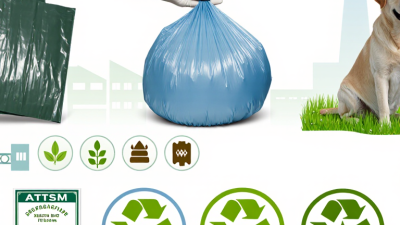
Manufacturers select materials, convert film into bags, print and seal the product, and check quality. For bags marketed as compostable, testing against EN 13432 includes the criteria shown below.

These are separate test criteria under controlled industrial composting conditions: at least 90% biodegradation within six months, and no more than 10% of the original dry mass remaining as fragments larger than 2 mm after 12 weeks. They are not a guarantee of performance in home compost or the natural environment.

How Are Dog Poop Bags Designed and Made in China?

A dependable dog poop bag begins with its intended use: carrying waste without leaking or tearing. Designers choose a film structure, thickness, bag dimensions, and seal shape to balance strength with easy dispensing. A roll’s perforations must separate cleanly, while the opening should fit comfortably over a hand. Small details matter.

Material choices deserve careful attention. The OECD’s Global Plastics Outlook reports that global plastics production reached 460 million tonnes in 2019, while plastic waste reached 353 million tonnes. These figures cover all plastics, not dog bags specifically, but they underline why reducing excess film and production scrap matters. In Chinese factories, resin is blended, melted, and blown into thin film, then printed, cut, perforated, and heat-sealed. Recycled or compostable claims need evidence; a material’s appearance alone proves little.

Then comes testing. Quality teams can check bag dimensions, film thickness, seal strength, perforation, and leakage using documented sampling plans. Operators should inspect seals and rolls during production, not only at the end. One weak point is that a bag can pass a simple tear test yet still leak at its seam. Buyers should request test methods, batch records, and independent certification where relevant. Standards such as ASTM D6400 or EN 13432 may support compostability claims, but only when the finished product is tested and certified accordingly.

Which Materials and Features Determine Bag Performance?

Bag performance often begins with film selection, but thickness alone does not tell the whole story. Polyethylene blends can offer flexibility and reliable sealing, while recycled-content films may vary in consistency. Compostable films need suitable storage because heat and humidity can affect them; they also require appropriate disposal facilities. A practical sample test is simple: fill a bag with damp paper, tie it, and lift gently. Check for pinholes, seam splitting, and a clean tear from the roll. Small details matter. For wet-weather walks, thicker film and reinforced seams may help reduce leaks. But an overly stiff bag can feel awkward and use more material than needed.

Handle shape, opening width, and roll perforations influence daily use as much as film choice. A bag should open easily, and its knot should stay secure after filling. Manufacturers can compare samples across batches, record film thickness, and test seams under consistent conditions. Ask for material specifications and test results, not just an “extra strong” claim. When evaluating a China-based producer, review production controls, sample consistency, and how defects are handled. Not every shipment. I would also inspect roll edges and perforations; these small faults are easy to miss. Good performance balances dependable containment, easy handling, and materials suited to local disposal options.

How Can Buyers Verify a Manufacturer’s Quality and Compliance?

A reliable disposable dog poop bag supplier should be able to explain how each order is made and checked. Ask for a specification sheet covering bag dimensions, thickness, material, handle strength, and roll count. Compare it with a production sample, not just a polished catalog image. Pull several bags from different rolls and check for pinholes, weak seams, uneven cutting, and tearing under a realistic load. Small defects matter.

Review quality records and compliance documents carefully. Test reports should identify the specific product or material tested, the test method, and the issuing laboratory. Confirm important reports directly with the laboratory when possible. Requirements vary by destination, so check which rules apply to your market and product claims. A general certificate may not prove that a particular bag meets a specific requirement. Be cautious with terms such as “compostable”; ask what standard and disposal conditions support the claim.

Factory checks add useful context. Ask how incoming materials, production batches, and finished goods are recorded, and whether rejected products are tracked. During a video or site inspection, look for labeled material storage, sealed samples, and batch codes that match shipping records. No check is perfect. A neat audit can miss a weak seam, and an excellent sample cannot guarantee every shipment. Agree on inspection criteria before production, then retain samples from each approved batch.

China Best Disposable Dog Poop Bags Manufacturer? — How Can Buyers Verify a Manufacturer’s Quality and Compliance?
Verification Area What Buyers Should Check How to Verify Useful Evidence or Decision Criteria
Manufacturer identity and production capability Confirm whether the supplier is the actual manufacturer, a trading company, or both. Check that the stated facility can produce the bag format, material, and order volume required. Request the registered business details, factory address, production-process overview, and a live video or third-party factory audit. Cross-check the business information through reliable registration or audit channels. Consistent company and facility details; verifiable production equipment and process; clearly identified subcontracting, if any.
Quality management system Check whether the factory has a quality-management certification, such as ISO 9001, and whether its scope covers the relevant manufacturing activities. Ask for the complete, current certificate. Verify its status, scope, certification body, and accreditation through the certification body or relevant accreditation directory. A certificate alone does not prove product quality. Confirm that the site and product scope are relevant and that the certificate is valid.
Material and product specification Agree in writing on bag dimensions, thickness, material composition, color, perforation, handle style, roll count, and packaging. Clarify measurement tolerances. Compare the signed specification with pre-production samples and incoming inspection results. Specify how and where thickness and dimensions are measured. A controlled specification and approved reference sample; documented tolerances rather than vague descriptions such as “extra strong.”
Mechanical performance Assess the properties that matter for use, such as tensile strength, tear resistance, seam strength, and resistance to leakage through the bag or seals. Request test reports for the actual product or agreed material. Review the test method, sample details, conditioning, results, and laboratory identity. Agree on acceptance limits before production. There is no single universal pass value for every dog-waste bag. Set product-specific limits and test conditions in the purchase specification.
Compostability claims If a bag is marketed as compostable, identify whether the claim refers to industrial composting or home composting. Check the exact product, material, thickness, and conditions covered. Request the applicable certificate and full test report. Verify the certificate with its issuer and confirm that it covers the finished bag, not only a raw-material grade. ASTM D6400 relates to plastics intended for municipal or industrial aerobic composting; EN 13432 addresses packaging recoverable through composting and biodegradation. These do not by themselves establish home compostability.
Environmental and regulatory claims Review claims such as “biodegradable,” “recycled content,” or “plastic-free” carefully. Requirements and permitted claims vary by sales market. Request evidence supporting each specific claim, including test reports, chain-of-custody documents where applicable, and market-specific compliance assessments. Check local rules for the destination market. Do not treat a general material statement as proof that the finished product meets a particular legal or compostability requirement.
Chemical compliance Identify the applicable chemical restrictions for the intended market and product. Avoid assuming that a certificate for one regulation automatically covers all markets or uses. Request a product-specific declaration and recent test reports from a competent laboratory. Confirm the tested sample matches the ordered material, color, and formulation. REACH requirements may be relevant to products placed on the EU market; applicability depends on the product and substances involved. Ask for a documented assessment against current destination-market requirements.
Testing laboratory and report validity Check whether test results are independent, traceable, and relevant to the specific product being purchased. Verify the report number with the issuing laboratory where possible. Check sample description, test date, methods, results, and whether the laboratory’s accreditation scope covers the tests performed. Prefer reports with clear sample identification and methods. A report for a different formulation, thickness, or product is not equivalent evidence.
Production consistency and lot control Confirm how the manufacturer controls raw materials, production settings, inspection, and changes between batches. Request a quality-control plan, batch or lot coding example, inspection records, and the process for approving changes to materials or suppliers. Each shipment should be traceable to a production lot, with documented checks and a defined procedure for non-conforming product.
Pre-shipment inspection Agree on inspection timing, sample selection, defect categories, sampling plan, and shipment acceptance criteria before placing the order. Use an agreed inspection checklist and, where appropriate, an independent inspection service. Check dimensions, printing, roll count, seals, packaging, and selected performance tests. Written acceptance criteria reduce disputes. Inspection does not replace responsibility for ongoing factory process control.
Packaging, labeling, and documentation Confirm that carton marks, product claims, warnings, language, recycling instructions, and import documents meet the destination-market requirements. Approve final artwork before production and have the importer or qualified compliance adviser review applicable local requirements. Keep approved artwork, product specifications, declarations, test reports, and shipment records together for traceability.
Supplier approval and ongoing monitoring Evaluate more than the lowest quotation: consider quality history, corrective-action responsiveness, capacity, lead time, and change control. Start with samples or a controlled trial order, record performance, and periodically review complaints, inspection findings, and corrective actions. Use documented supplier scorecards and require advance approval for material, process, or production-site changes.

Buyer reminder: Standards, certification, and legal requirements depend on the product claim and destination market. Confirm current requirements with the relevant standards body, regulator, certification issuer, or qualified compliance professional before purchase.

What Criteria Help Identify the Best Manufacturer for Your Needs?

Choosing the best disposable dog poop bags manufacturer starts with the bag itself. Check the film thickness, flexibility, and resistance to leaks. A bag should separate cleanly at the perforation without tearing open when pulled from the roll. Ask for material specifications and test records, not just a polished product photo. Ask for evidence. Small details matter. A faint odor, uneven seams, or rolls that jam in a dispenser can make daily use frustrating.

Look closely at production consistency, too. Request samples from more than one production batch, then test them with the dispensers your customers are likely to use. Compare printing clarity, roll counts, packaging, and how the bags handle in cold or damp conditions. Confirm the manufacturer’s minimum order quantity, lead time, and ability to explain quality checks. Clear answers are a useful sign; vague promises are not. A sample can perform well while a later shipment varies, so ask how defects are recorded and resolved. No checklist catches every problem, and I would not treat a single successful test as proof of lasting reliability. A careful supplier should welcome specific questions and provide information you can verify.