Leave Your Message

China Top Dog Poop Bag Dispenser Manufacturer?

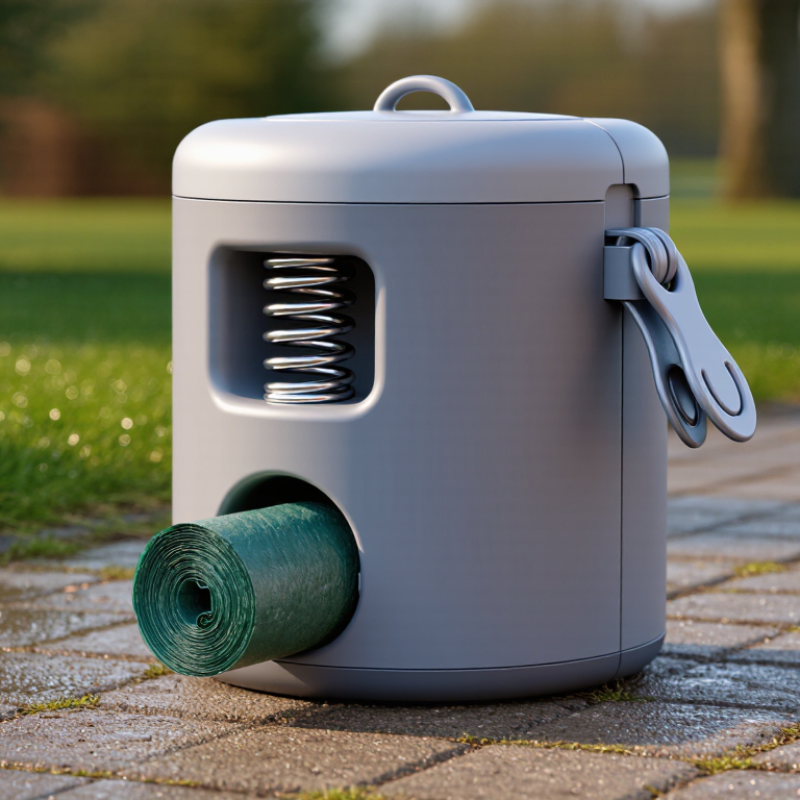
Choosing a China Top Dog Poop Bag Dispenser manufacturer requires more than comparing factory prices. Buyers need consistent molding, dependable materials, practical testing, and responsive communication. A dispenser may look simple, yet its spring, lid, clip, and bag fit must work during real outdoor use.

Li Wei, a China-based pet-product development specialist with experience in accessory sourcing, explains, “A reliable Dog Poop Bag Dispenser should open easily, hold the roll securely, and survive daily movement.” That view reflects an important purchasing reality. Product quality is experienced on sidewalks, park paths, and rainy morning walks. A loose cap can expose bags to moisture. A weak clip can leave the dispenser behind.

Manufacturers should provide clear material details, sample approval, production photos, and inspection records. They should also explain customization limits, packaging options, and replacement procedures. These details help importers judge reliability before placing larger orders. Certifications and test documents should be checked carefully, not accepted as decoration.

Still, no supplier is perfect. A polished catalog cannot replace a physical sample. Color consistency may vary between batches. Delivery estimates can change during busy seasons. That deserves attention.

This guide examines how to identify a capable China Top Dog Poop Bag Dispenser manufacturer. It considers factory experience, design flexibility, quality control, communication, and after-sales support. The goal is not simply to find the lowest quote. It is to select a partner whose dispenser performs reliably when convenience, cleanliness, and customer trust matter most.
China Top Dog Poop Bag Dispenser Manufacturer?

Dog Poop Bag Dispenser Types and Their Core Functions

China Top Dog Poop Bag Dispenser Manufacturer?

Dog poop bag dispensers look simple, but their functions differ significantly. The 2023–2024 APPA National Pet Owners Survey reports that 66% of U.S. households own a pet. That large user base demands practical walking accessories.

A standard roll dispenser holds compostable or plastic bags and uses a side opening for quick pulling. A clip-on dispenser attaches to a leash, backpack, or belt. It keeps bags within reach during crowded street walks.

A refillable box suits frequent users and reduces repeated packaging. Some designs include a built-in waste compartment, reflective strips, or a small storage space for keys. Each feature solves a real problem, but not every feature deserves the extra weight.

Material choice affects daily reliability. ABS plastic is light and impact-resistant. Silicone feels softer and handles minor drops well. A rotating lid can stop rolls from falling out. Vent holes may reduce moisture buildup, although poor sealing can still cause odor.

According to APPA’s 2023 U.S. pet industry report, Americans spent about 147 billion dollars on pets, showing strong demand for useful accessories. However, sales data does not prove every design works outdoors. Field testing matters more than attractive packaging.

Tips: Check one-handed operation with gloves. Test the clip under repeated pulling. Leave enough space for thicker bags. Reflective details help after sunset. A dispenser should remain quiet, secure, and easy to clean. Small weaknesses become obvious on long walks.


APPA’s 65.1 Million U.S. Dog-Household Estimate and Market Demand

China Top Dog Poop Bag Dispenser Manufacturer?

According to the American Pet Products Association, 65.1 million U.S. households owned a dog in its recent estimate. This large household base creates steady demand for practical waste-management accessories. A dispenser clipped to a leash must survive daily walks, sudden pulls, rain, and repeated opening. Small details matter.

A capable China-based manufacturer should provide more than attractive product photos. Buyers should review material specifications, mold quality, spring strength, and loading performance. A useful factory audit may include production records, inspection procedures, packaging checks, and sample testing. Ask whether the dispenser works with different roll sizes. Test it with one hand while holding a leash.

Good products should feel light, but not fragile. Recycled or durable plastic may support different purchasing goals, although material claims require evidence. A supplier should clearly explain available testing and production controls. Vague promises are not enough.

Demand is substantial, but demand alone does not guarantee a successful product. Color selection, retail packaging, shipping protection, and consistent dimensions influence customer satisfaction. We have seen simple dispensers fail because the lid loosened after repeated use. That detail is easy to miss. Better sampling and field testing can reduce this risk, though no manufacturing process is perfect. Reliability grows through documented checks, honest communication, and improvements based on real walking conditions.

U.S. Dog-Household Estimate and Market Demand

The United States had an estimated 65.1 million dog-owning households in the 2023–2024 survey period. This large and sustained household base indicates broad potential demand for recurring dog-care products, including dog poop bags and dispensers.

China Manufacturing Processes, Materials, and Injection-Molding Capacity

China Top Dog Poop Bag Dispenser Manufacturer?

China’s manufacturing strength comes from integrated molding, tooling, and assembly networks. Grand View Research reports that Asia-Pacific held the largest share of the global plastic injection molding market in 2023. This regional scale supports competitive tooling costs and faster component sourcing.

Most dispensers use ABS or polypropylene for the housing. ABS gives a firm, smooth surface. Polypropylene reduces weight and material cost. Injection molding usually begins with CAD design, steel mold machining, trial shots, and dimensional inspection. A practical factory should check wall thickness, gate marks, warping, and latch strength. Small errors matter.

The dispenser should open with one hand. It should also resist rain and repeated drops. A 2024 Mordor Intelligence market analysis describes pet waste management as a steadily growing, mid-single-digit market. That trend increases demand for durable, refill-friendly accessories. Some factories can operate dozens of injection machines, from small 80-ton units to larger systems above 300 tons. Capacity alone proves little. Process control does.

Recycled resin can lower virgin plastic use, but color consistency may suffer. This is often overlooked. ASTM D7611 identifies resin codes, while ASTM D638 supports tensile testing for molded plastics. Suppliers should document resin batches, mold revisions, cycle times, and inspection results. One weakness remains common: factories may report machine capacity without showing actual monthly output or rejection rates.

China Top Dog Poop Bag Dispenser Manufacturer? - China Manufacturing Processes, Materials, and Injection-Molding Capacity

Evaluation Dimension Typical Industry Data Manufacturing Relevance
Common Product Types Clip-on dispensers, belt-loop dispensers, key-ring dispensers, leash-mounted dispensers, and refill-roll containers The housing design determines mold structure, assembly method, attachment strength, and packaging requirements.
Primary Housing Materials Polypropylene (PP), ABS, high-impact polystyrene (HIPS), polycarbonate (PC), thermoplastic elastomer (TPE), and recycled plastics Material selection affects impact resistance, flexibility, surface finish, cost, weight, and suitability for outdoor use.
Recommended Material by Component Rigid shell: PP or ABS; flexible outlet or grip: TPE; transparent window: PC or clear ABS; spring: stainless steel; clip: nylon, POM, or metal Using separate materials for structural and flexible parts improves usability and product durability.
Main Manufacturing Process Plastic injection molding for the dispenser shell, cap, button, and clip components Injection molding provides repeatable dimensions, fast cycle times, and economical mass production after tooling is completed.
Secondary Processes Deburring, ultrasonic welding, snap-fit assembly, screw assembly, pad printing, laser marking, spray coating, and quality inspection The required secondary process depends on whether the design uses permanent joining, replaceable parts, or decorative branding.
Typical Product Dimensions Approximately 70–120 mm long, 45–75 mm wide, and 35–60 mm deep, depending on roll size and attachment design Compact dimensions support portability while allowing sufficient internal volume for standard waste-bag rolls.
Typical Product Weight Approximately 15–60 g for the empty plastic dispenser, excluding the waste-bag roll Lower weight reduces leash and belt load, while thicker walls may improve impact resistance.
Mold Configuration Single-cavity molds for prototypes or low-volume production; multi-cavity molds for higher-volume production Cavity count influences tooling investment, output per cycle, cycle balance, and unit cost.
Typical Injection-Molding Machine Range Approximately 50–160 tonnes of clamping force for small dispenser components; larger assemblies may require more The required machine size depends on projected part area, mold layout, material, cavity count, and safety margin.
Typical Injection Cycle Approximately 20–60 seconds for small, single-material molded parts, subject to resin, wall thickness, mold cooling, and automation Cycle time directly affects hourly output and should be confirmed during mold trials rather than assumed from product size alone.
Indicative Output Capacity A four-cavity mold running a 30-second cycle can theoretically produce about 480 molded pieces per hour before downtime, rejects, and material changes Actual production capacity is lower than theoretical capacity because of setup, maintenance, inspection, replenishment, and equipment utilization.
Tooling Materials Pre-hardened mold steel for general production; hardened tool steel for longer service life and high-volume applications Tool-steel selection affects mold longevity, polishing quality, maintenance frequency, and total tooling cost.
Design Features to Verify Uniform wall thickness, draft angles, rounded corners, adequate rib support, suitable gate location, and easy demolding Injection-molding-friendly geometry helps prevent sink marks, warpage, short shots, weld-line weakness, and ejection damage.
Quality-Control Checks Dimensional inspection, visual inspection, clip pull testing, opening-and-closing testing, drop testing, assembly checks, and color verification Testing should reflect actual use, including repeated dispensing, attachment to a leash or belt, and outdoor handling.
Material and Product Compliance Material declarations, restricted-substance screening, recycled-content documentation where applicable, and packaging compliance for the destination market Compliance requirements vary by destination, product claims, packaging format, and whether the product is marketed for contact with food or children.
Customization Options Custom colors, textures, surface finishes, attachment systems, bag-roll dimensions, packaging, and non-branded decorative marks Customization may require new tooling, mold modifications, color matching, additional assembly steps, or new validation samples.
Best-Fit Production Model Prototype tooling for design validation; soft or semi-hard tooling for market testing; hardened multi-cavity tooling for established high-volume demand The appropriate production model balances forecast volume, tooling budget, product life cycle, and required launch speed.

Note: Capacity figures are representative engineering estimates for small plastic accessories. Actual results depend on mold design, resin grade, machine availability, operator efficiency, quality requirements, and production scheduling.

ASTM D6400, EN 13432, and ISO 17025 Compliance for Bag Compatibility

China Top Dog Poop Bag Dispenser Manufacturer?

A dependable dispenser manufacturer should understand bag compatibility, not only plastic molding. ASTM D6400 and EN 13432 define important requirements for compostable plastic products. They address disintegration, biodegradation, and potential environmental impact under controlled composting conditions. These standards do not automatically prove that every bag fits every dispenser. Size matters. Roll width, core diameter, bag thickness, and perforation spacing can affect smooth dispensing. A professional supplier should check these details through samples and documented testing.

ISO 17025 is different. It confirms that a testing laboratory operates with technical competence and reliable procedures. It does not certify the dispenser itself. Test reports should identify the sample, method, date, and laboratory scope. I have seen compatibility claims become unclear when sellers show only a certificate logo. That is not enough evidence. The honest approach is to connect each report with a specific bag formula and dispenser design.

Tips: Request a physical compatibility test before ordering. Pull at least ten bags from one roll. Check tearing, slipping, residue, and loading speed. Test the dispenser outdoors, where moisture and cold can change bag behavior. Ask whether compostability claims apply to the complete bag or only selected materials. Small differences can cause daily frustration. A careful manufacturer will explain limits instead of promising perfect performance.

Supplier Evaluation Through ISO 9001, AQL 1.5, MOQ, and Lead-Time Data

Choosing a China-based dog poop bag dispenser manufacturer requires more than a polished catalog. I review ISO 9001 records, production samples, and inspection habits before discussing price. A valid certificate matters, but daily execution matters more. During factory checks, I look for documented incoming-material controls, machine maintenance, and traceable corrective actions. Small gaps appear. A missing inspection signature can reveal weak discipline, even when the facility looks organized.

AQL 1.5 provides a practical sampling benchmark for dispenser orders. It does not mean every unit is perfect. I request the agreed lot size, sample size, critical defects, major defects, and minor defects in writing. For moving lids, spring tension, screw alignment, and dispensing smoothness deserve close checks. One rough edge can damage packaging or frustrate users. That detail is easy to overlook during a fast audit.

MOQ and lead time shape the real purchasing risk. A low MOQ may carry higher unit costs or limited color options. A short lead time may exclude tooling, pre-production approval, and final inspection. I compare the quoted timeline with actual capacity, raw-material availability, and holiday production schedules. Ask for evidence. Recent order history is more useful than a confident promise. I also leave room for delays because my own forecasts are never flawless. That admission improves planning, although it does not excuse vague commitments.