
Leave Your Message

Top Compostable Bags For Dog Poop Suppliers

Choosing the Top Compostable Bags For Dog Poop Suppliers requires more than comparing prices, colors, or thickness. A reliable supplier should provide certification, material transparency, stable production, and clear disposal guidance. The European Bioplastics and nova-Institute market update reports that global bioplastics production capacity could rise from about 2.2 million tonnes in 2023 to approximately 3.4 million tonnes by 2028. This growth signals opportunity, but it also creates confusion. Not every “green” bag is compostable.

The Biodegradable Products Institute (BPI) recommends checking recognized standards, such as ASTM D6400, before accepting compostable packaging claims. Rhodes Yepsen, BPI’s executive director, has repeatedly emphasized that “compostable packaging is not a silver bullet.” That warning matters for dog-waste bags. Certified products may require commercial composting facilities, and many facilities reject pet waste because of pathogens, medicines, or local operating rules. Home composting is usually unsuitable. The label alone does not solve disposal.

This guide evaluates suppliers through a practical lens. It considers certification, resin quality, leak resistance, bag thickness, printing, private-label support, production capacity, and documentation. A dependable bag should open smoothly, resist tearing around the knot, and remain stable during a rainy morning walk. Small details matter. Supplier claims still need checking.

The market is promising, but imperfect. Some manufacturers communicate responsibly; others rely on vague eco-language. Buyers should request current certificates, test reports, sample batches, and end-of-life instructions before signing contracts. This approach supports more credible sourcing and reduces the risk of paying for sustainability claims that cannot be verified.
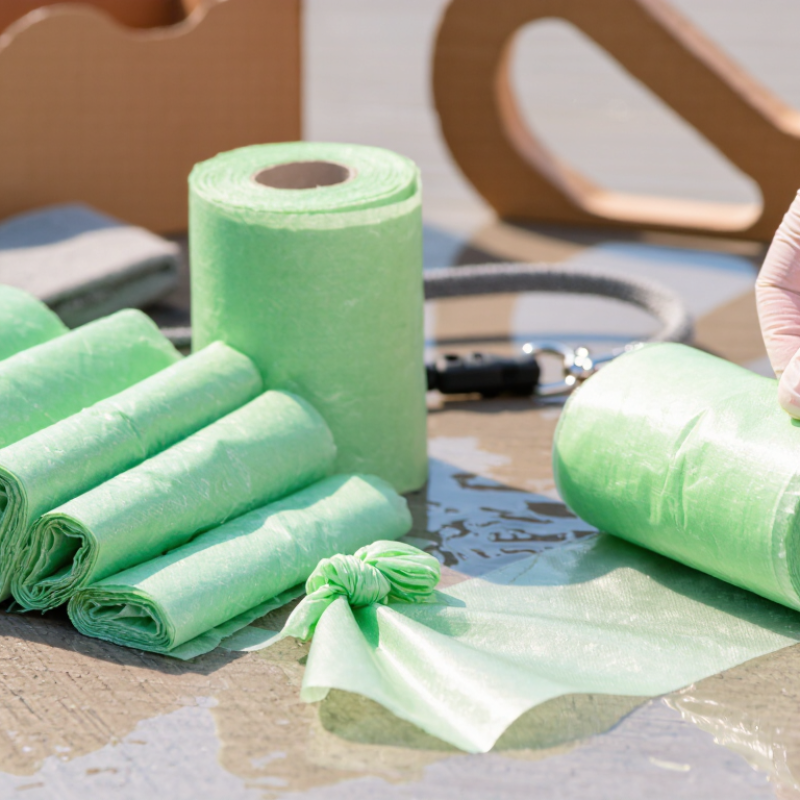
Top Compostable Bags For Dog Poop Suppliers

What Makes a Dog Poop Bag Truly Compostable

Top Compostable Bags For Dog Poop Suppliers

A truly compostable dog poop bag needs more than a green label. It should meet recognized standards, such as EN 13432 or ASTM D6400. EN 13432 requires 90% biodegradation within six months and substantial disintegration within twelve weeks under controlled conditions. These tests use industrial composting environments, not a cool backyard pile. That difference matters.

Check the supplier’s certificate, test laboratory, and material declaration. A credible supplier should identify the compostable polymer blend, bag thickness, and production batch. “Biodegradable” alone is too vague.

The European Bioplastics and nova-Institute market report estimated global bioplastics production at about 2.18 million tonnes in 2023, with packaging using nearly half of that capacity. Growth is impressive, but rising output does not automatically prove better compostability.

In practical use, the bag must resist a warm, wet deposit without splitting. I test the bottom seam, stretch the handle, and leave a filled sample briefly before disposal. Small failures become unpleasant quickly.

Certification also cannot solve local collection limits. Many composting facilities reject pet waste because of pathogens, even when the bag itself meets composting standards.

The U.S. Environmental Protection Agency advises careful handling of pet waste and warns against placing it in compost used for edible plants. I still find supplier claims difficult to compare, because certificates may cover one film formula, while factories quietly change thickness or additives.


Key Materials Used in Compostable Dog Poop Bags

Choosing compostable dog poop bags requires more than reading the word “compostable.” The material blend controls strength, flexibility, moisture resistance, and breakdown performance. Many reliable bags use plant-based starch, often from corn or other renewable crops. Starch helps create a softer film, but it can absorb moisture if poorly formulated.

Polylactic acid, or PLA, may add structure and clarity to the bag. It is usually combined with PBAT, a compostable polymer that improves stretch and tear resistance. This balance matters when a bag holds wet waste on a rainy walk. Some manufacturers also add biodegradable fillers, natural plasticizers, or mineral compounds. The exact percentage affects both handling and composting behavior.

I have found that thickness alone does not prove quality. A thick bag can still split at the seam, while a thinner film may perform better with careful processing. The handles should stretch evenly, without sharp thinning near the joint. Printing inks and adhesive components also deserve attention, because every added material should suit the intended composting environment. Industrially compostable bags may require controlled heat, moisture, and airflow, unlike home compostable products. Certification documents should identify the tested material, not merely the finished packaging. Testing remains imperfect, especially when real household compost piles vary widely. A practical check includes opening the bag, stretching the seam, and inspecting it for pinholes before regular use.

Top Compostable Bags For Dog Poop Suppliers - Key Materials Used in Compostable Dog Poop Bags

Material or Material Blend Typical Bio-Based Content Main Functional Role Common Bag Characteristics Relevant Composting Standard Important Purchasing Consideration
PBAT and PLA blend Partly bio-based; PLA is commonly derived from fermented plant sugars, while PBAT is fossil-based but biodegradable under suitable composting conditions. PBAT provides flexibility and toughness; PLA contributes stiffness and compostable polymer content. Soft hand feel, good tear resistance, heat-sealable structure, and suitable odor containment when properly converted. Frequently evaluated against EN 13432, ASTM D6400, or equivalent industrial-compostability requirements. Check the finished-bag certification rather than assuming that every PBAT/PLA ratio is certified.
PBAT and thermoplastic starch blend Contains starch from crops such as corn, potato, cassava, or wheat; the exact percentage varies by formulation. Starch can increase renewable content and support disintegration, while PBAT maintains flexibility and film strength. Flexible film, generally suitable for flat-bottom or gusseted bags, with performance dependent on moisture control and formulation. May be designed for industrial composting under EN 13432 or ASTM D6400 testing. Ask for moisture-barrier test results because starch-containing films can be more sensitive to humidity during storage.
PLA-based blend PLA is commonly produced from renewable agricultural feedstocks, including corn or sugarcane-derived sugars. Provides stiffness, printability, and a relatively clear or translucent appearance when used in suitable film structures. Usually requires blending or modification to improve softness, puncture resistance, and seal strength for dog-waste bags. Finished products may be tested to EN 13432 or ASTM D6400 for industrial composting. A high PLA percentage does not automatically mean the bag is suitable for home composting.
Thermoplastic starch compound High renewable feedstock potential, depending on the starch content and the other polymers or additives used. Adds renewable content and can help the film break down under controlled composting conditions. May provide a matte appearance and natural texture; flexibility, water resistance, and tear strength depend strongly on the compound. Requires finished-product testing against a recognized compostability standard. Review tensile strength, elongation, seam strength, and shelf-life data before selecting the material.
Cellulose film or cellulose-based laminate Derived from regenerated cellulose, typically sourced from wood pulp or other plant cellulose. Provides a plant-derived film option with good transparency and printability. Can be less resistant to moisture and puncture than flexible compostable polymer films unless coated or laminated. Compostability depends on coatings, inks, adhesives, and the complete bag structure. Confirm whether the entire finished structure, not only the cellulose layer, has been assessed.
PBAT-dominant compostable film Usually lower in bio-based content than starch- or PLA-rich blends, although it can be combined with renewable polymers. Delivers flexibility, elongation, puncture resistance, and reliable heat sealing. Often suitable for thin, flexible bags with good handling performance and resistance to stretching during use. Commonly assessed under industrial-compostability standards such as EN 13432 or ASTM D6400. Do not describe the bag as bio-based solely because it is compostable; request both compostability and bio-based-content documentation.
Recycled paper or paper-based outer packaging May contain recycled fiber, but this normally refers to the carton, wrapper, or sleeve rather than the leak-resistant bag film. Provides secondary packaging, product information, and roll protection. Can reduce plastic packaging use but generally cannot replace the moisture-resistant film used for the waste bag itself. Paper packaging should be assessed separately from the compostable bag. Verify coatings, adhesives, laminates, and disposal instructions for the packaging components.
Selection note: Compostable dog poop bags should be evaluated as complete finished products, including film, inks, additives, cores, and packaging. EN 13432 and ASTM D6400 generally relate to controlled industrial composting conditions; they do not automatically indicate suitability for backyard or home composting.

How to Evaluate Compostable Bag Suppliers

When evaluating compostable dog poop bag suppliers, start with evidence, not green wording. The OECD’s Global Plastics Outlook reported that only 9% of plastic waste was recycled in 2019. This makes credible disposal claims important. Ask suppliers for certification against recognized standards, such as EN 13432 or ASTM D6400. Check whether certification covers the finished bag, not only the raw material. Also request recent laboratory reports, factory audit records, and batch-level quality documents.

Production scale matters, but consistency matters more. European Bioplastics and the Nova Institute reported global bioplastics production capacity of about 2.18 million tonnes in 2023. Compostable materials represented only a portion of that market. A serious supplier should explain its feedstock, thickness tolerance, sealing method, and storage limits. Test samples with wet waste, sharp edges, and cold temperatures. Record tearing, leakage, odor control, and opening speed. Small details matter.

Do not trust a silky texture.

A supplier may provide attractive samples but inconsistent commercial batches. Request samples from different production dates. Ask how humidity is controlled during storage and shipping. One weakness in my own checklist is overvaluing certification while ignoring user handling. A bag can meet a standard and still feel frustratingly small or fragile. Confirm minimum order quantities, lead times, packaging materials, and complaint procedures in writing. Reliable suppliers welcome difficult questions and provide traceable answers, even when their product has limitations.

Supplier Certifications, Quality Standards, and Compliance

Reliable compostable dog poop bag suppliers prove compliance with documents, not attractive packaging. European Bioplastics and nova-Institute reported global bioplastics production capacity at about 2.18 million tonnes in 2023. That capacity may reach 7.43 million tonnes by 2028. Growth increases the need for careful supplier screening.

Look for third-party certification against EN 13432, ASTM D6400, or ISO 17088. These standards assess biodegradation, disintegration, compost quality, and material safety. However, “compostable” usually means industrial composting conditions. It does not guarantee backyard composting. The supplier should provide current certificates, laboratory reports, and the exact product code tested. Certificates covering only resin cannot automatically validate the finished bag.

Quality checks should include film thickness, tensile strength, tear resistance, seal performance, and opening reliability. Ask for batch numbers and retained samples. A practical trial can expose failures: bags splitting during tying, damp rolls sticking together, or handles stretching under moderate weight. Supplier audits should review raw-material traceability, production controls, and corrective-action records. ISO 9001-based systems can support consistency, but certification alone is not proof of performance. A certificate can be real and still be poorly matched to the product. Procurement teams should verify expiration dates, testing laboratories, composting claims, and destination-market requirements before approval.

Packaging, Pricing, and Purchasing Considerations

Top Compostable Bags For Dog Poop Suppliers: Packaging, Pricing, and Purchasing Considerations

When comparing compostable dog poop bag suppliers, inspect the material, thickness, and sealing quality. A reliable bag should resist leaks during collection and transport. I have found that 15 to 20 microns often feels practical for daily use, but testing remains essential. Packaging also affects storage and customer perception. Rolls should unwind smoothly, while cartons need moisture-resistant construction. Clear material information builds trust, especially when buyers ask about composting conditions. Avoid vague claims such as “eco-friendly” without supporting specifications.

Pricing depends on resin type, bag size, printing, order volume, and packaging format. Request samples before accepting a large quotation. Compare the cost per bag, not only the carton price. Some suppliers offer low unit prices but add high mold, printing, or shipping charges. Ask about production lead time, inspection procedures, and replacement policies. A realistic purchase plan should include a small buffer for damaged rolls or changing demand. My earlier estimates were sometimes too optimistic, particularly when custom packaging was involved.

Tips: Check bag dimensions with your waste-bin size. Test filled bags for stretching and leakage. Confirm whether the product requires commercial composting facilities. Ask for batch records and material certificates. Review the supplier’s communication speed, not just the price. A perfect specification is useless if deliveries arrive late. Small trial orders may cost more initially, but they reveal weaknesses before serious purchasing commitments.