China’s Poop Bags And Dispenser industry is expanding with urban pet ownership, e-commerce, and stronger expectations for daily cleanliness. The opportunity is practical, but supplier selection is rarely simple.
The American Pet Products Association reported 65.1 million U.S. households owned dogs in its 2023–2024 National Pet Owners Survey. That figure suggests substantial recurring demand for waste bags, dispensers, refill rolls, and walking accessories. Grand View Research also valued the global pet care market at approximately USD 150 billion in 2023. However, broad pet-care data does not measure poop-bag demand directly. This limitation matters.
This guide examines China’s top suppliers through manufacturing experience, material options, printing quality, mold capability, certifications, production scale, and export reliability. It also considers practical details, such as whether a dispenser opens smoothly with wet hands or whether a roll fits common leash holders. Small details often decide repeat orders.
Suppliers may offer recycled polyethylene, compostable blends, or oxo-degradable claims. These terms require careful verification. The European Bioplastics market data and relevant ASTM or EN testing standards can help buyers assess compostability, but certification scope varies by product and facility. A “green” label alone proves little.
Price is important. It is not everything.
Factory audits, sample testing, shipment records, and transparent documentation provide stronger evidence than polished catalogues. The following selection is therefore a research-based starting point, not an absolute verdict. Market conditions change, and some supplier information may require direct confirmation before purchase.
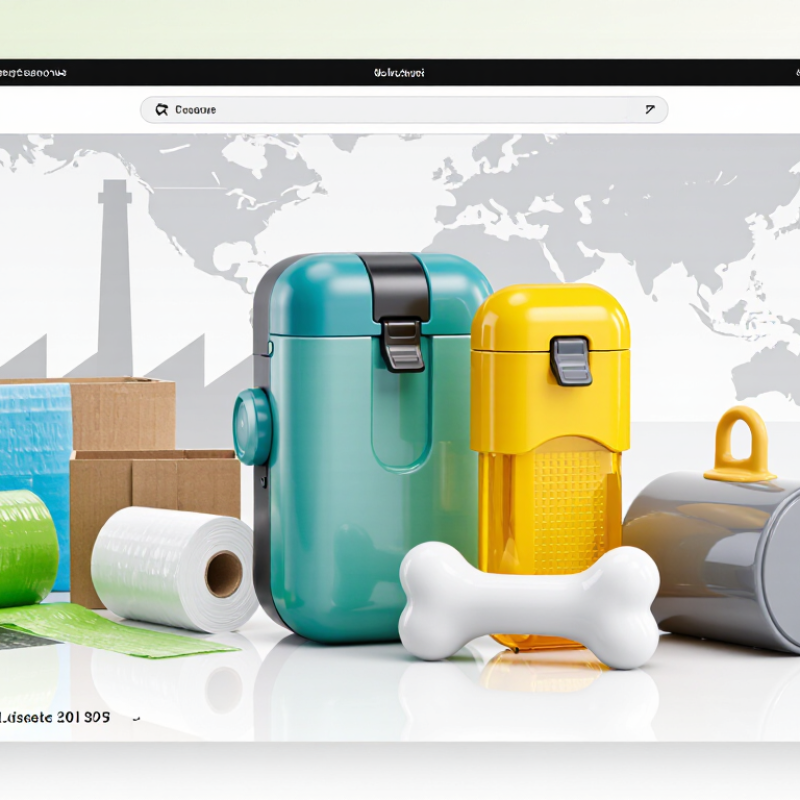
China’s poop bag and dispenser supplier market has grown with demand from pet retailers, grooming chains, and online sellers. Suppliers serve both domestic and overseas customers. Many factories operate in established manufacturing regions, creating efficient access to film, packaging, printing, and injection molding services. This concentration can shorten production schedules. It can also make supplier differences harder to identify. Production scale, testing discipline, and communication quality vary widely.
During sample checks, buyers should inspect bag thickness, sealing strength, roll alignment, and dispenser fit. Small defects matter. A reliable supplier can explain material grades, production controls, and inspection procedures clearly. Recycled plastic may support sustainability goals, but its quality must remain consistent. Compostable material requires careful verification because marketing language can be vague. Dispensers also need practical testing, including one-handed opening, smooth roll movement, and resistance to cracking in cold weather.
Order planning often includes custom colors, packaging, barcode labels, and different roll counts. Clear specifications reduce avoidable revisions. Yet the market is not perfectly uniform. Some suppliers present strong samples but lack stable mass-production control. Others may offer lower prices while providing limited documentation. Buyers should request batch records, test reports, factory photos, and pre-shipment inspections. Delivery capacity deserves attention during seasonal demand. A capable sourcing process combines price analysis with physical testing, transparent communication, and regular quality reviews. Mistakes still happen, especially when buyers treat a sample as proof of every future shipment.
The chart summarizes indicative procurement specifications commonly offered by Chinese manufacturers, including bag dimensions, roll quantity, carton capacity, and dispenser storage capacity. Values are product-specification ranges rather than company rankings, sales figures, or market-share estimates.
When evaluating Chinese poop bag and dispenser suppliers, start with evidence, not catalog photos.
The APPA 2023–2024 National Pet Owners Survey reports that 66% of U.S. households own a pet. This creates steady demand, but it also raises quality expectations.
Request three production batches, not one sample. Compare thickness, seal strength, tear resistance, and leakage after filling. A practical test uses water and a 24-hour hold.
Material claims require closer inspection.
The 2024 European Bioplastics market data report shows global bioplastics production capacity continuing to expand, yet “biodegradable” does not always mean home-compostable.
Ask for test reports linked to EN 13432, ASTM D6400, or equivalent requirements. Verify the issuing laboratory’s accreditation, preferably under ISO/IEC 17025.
Certificates should match the exact resin, bag thickness, and factory address. Vague documents are warning signs.
Dispenser evaluation is more physical.
Check one-handed loading, roll alignment, cutting edges, spring fatigue, and noise during repeated pulls. Test at least 500 cycles. Small flaws appear quickly.
Review batch records, incoming-material controls, and corrective-action reports. A supplier that shares failure data may be more reliable than one promising “zero defects.”
Still, inspection can miss seasonal variation. Recheck pre-shipment samples, because a polished audit never guarantees every carton will perform identically.
China has become a major sourcing center for poop bags and dispensers. The top ten suppliers usually serve retailers, pet distributors, cleaning companies, and private-label buyers. Their product ranges often include leak-resistant bags, refill rolls, countertop dispensers, clip-on holders, and biodegradable material options.
Experienced buyers should examine more than catalog photos. Ask suppliers for film thickness, bag dimensions, roll length, sealing strength, and dispenser compatibility. A practical sample test can reveal weak seams quickly. Fill a bag with water, tie it, and leave it overnight. Small failures matter.
Reliable suppliers normally provide factory details, production capacity, inspection records, and clear packaging specifications. Some support custom colors, printed cartons, barcode labels, and mixed container orders. Communication quality also deserves attention. Slow replies may signal future delays. However, a polished sales response does not prove manufacturing strength.
Request samples from several of the top ten suppliers before making a decision. Compare odor control, tear resistance, perforation accuracy, and dispenser fit. Compostable claims require careful verification because local disposal conditions differ. This point is often overlooked. A supplier may offer attractive pricing, yet inconsistent roll length can increase the real cost. Buyers should record test results and revisit them after bulk production, since the first shipment is not always the best one.
Product types now range from flat bags to gusseted bags, tie-handle rolls, and refill packs. Coreless rolls reduce packaging waste and fit compact dispensers. Some suppliers also provide countertop dispensers for parks, apartments, and pet-care stores. According to the American Pet Products Association’s 2023–2024 survey, 66% of U.S. households own a pet. That ownership level supports demand for convenient, hygienic waste products.
Material selection needs practical testing. Common polyethylene bags offer strength and moisture resistance. Recycled polyethylene can reduce virgin plastic use, but consistency may vary. Compostable options often use PBAT, PLA, or starch blends.
European Bioplastics and nova-Institute reported global bioplastics production capacity of about 2.18 million tonnes in 2023. However, “biodegradable” does not guarantee home compostability. Buyers should request certification, thickness data, and actual disposal guidance.
I would not trust a green label alone.
Customization can include bag size, thickness, color, fragrance-free formulas, logo printing, carton design, and dispenser shape. A useful specification might be 23 × 33 centimeters, 15 microns, and a leak-resistant seal. Suppliers can also adjust roll length and core diameter. Small details matter.
During sampling, check tearing, odor control, print adhesion, and dispenser cutting performance. One weak point remains: custom printing may increase minimum order quantities and production waste. That trade-off deserves review.
Supplier selection should begin with performance, not catalog size. The American Pet Products Association reported US pet industry spending reached $147 billion in 2023. That scale increases demand for dependable waste-bag supply and consistent packaging.
Ask each Chinese supplier for film thickness, bag dimensions, tensile strength, and leak-test results. Request recent third-party laboratory reports. Compostable claims require careful checking. EN 13432 and ASTM D6400 describe different certification frameworks, so certificates should match your target market. Confirm whether testing covers the finished bag, not only the raw resin.
Visit the factory remotely or in person. Review extrusion lines, sealing equipment, production records, and carton storage. A supplier offering samples within three days may still need six weeks for stable mass production. That gap matters. Check minimum order quantities, color tolerances, dispenser assembly, and backup material sources. The 2024 APPA Dog and Cat Report shows sustained household demand, but demand alone cannot excuse weak quality control. I would also order a small trial shipment before signing annual terms. It may cost more initially. Yet one leaking bag can damage customer trust faster than a delayed advertisement. Be willing to revise your checklist after real use.