Leave Your Message
Choosing a reliable China supplier requires more than comparing bag prices. Extra Large Poop Bags must handle large breeds, multiple deposits, wet grass, and hurried outdoor walks. The American Pet Products Association reported 66% of U.S. households owned a pet in 2023–2024. That figure shows why dependable waste-control products matter.
Grand View Research identifies growing demand for convenient and sustainable pet-care products. Mordor Intelligence also reports continued expansion in the global pet-care market. However, market reports rarely separate extra-large bags from standard sizes. That limitation matters. Supplier claims still need practical verification.
Pet market analyst David Lummis has observed, “Convenience is a major driver of pet product purchases.” His point applies directly here. A useful bag should open smoothly, cover the hand, resist tearing, and remain comfortable to carry. A 15-by-9-inch opening may suit a large Labrador better than a narrow, longer design. Thickness also matters, but thicker plastic does not automatically mean better performance. Some bags feel strong until moisture exposes weak seams.
This guide reviews China’s leading Extra Large Poop Bags suppliers through product dimensions, material choices, odor control, certifications, production capacity, and export experience. It also considers recycled and compostable options, while recognizing that environmental claims require evidence. ASTM or EN testing can support credibility, but certificates should match the exact product. Samples tell the truth faster than polished catalogs. Suppliers may look similar online. Their consistency, packaging accuracy, and response to defects often reveal the real difference.
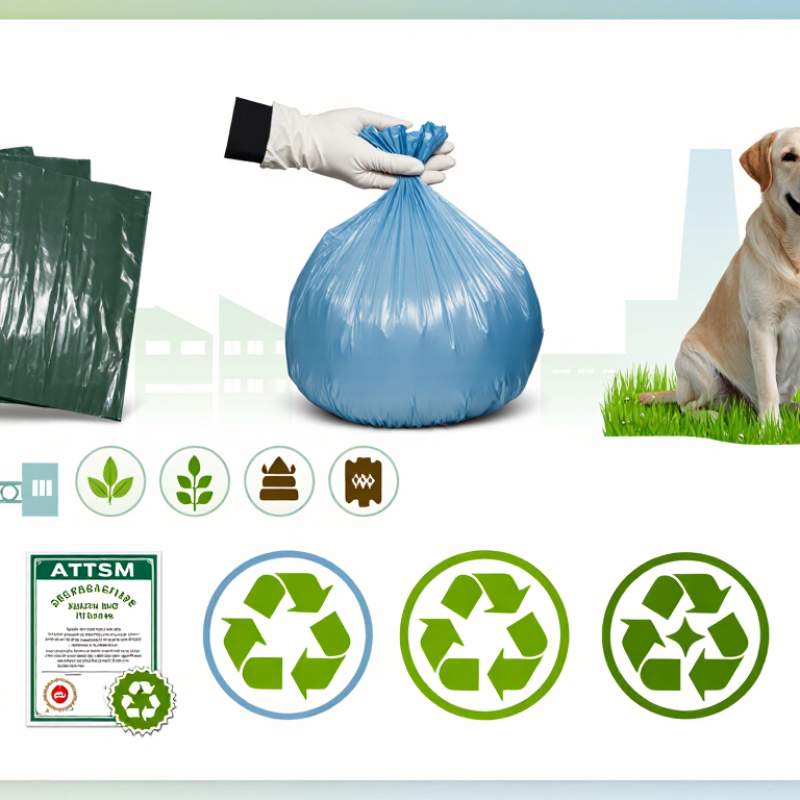
An extra large poop bag is defined by usable space, not an impressive label. It should hold larger waste comfortably, with room to tie the opening without touching the contents. A practical design often uses a wide opening, strong side gussets, and a longer body. Exact dimensions vary, so suppliers should provide measurements in millimeters. A bag measuring 330 by 380 millimeters may suit larger dogs, but actual capacity depends on thickness, material stretch, and seal quality.
Durability matters during real use. The bag should resist tearing when lifted, especially around the bottom seam and handle area. Leak resistance should be checked with water-filled samples and repeated pull tests. Odor control can improve comfort, but it does not replace reliable construction. Some suppliers describe bags as “extra large” without publishing load testing. That is a weakness worth questioning. Even careful specifications can miss cold-weather brittleness or awkward knotting.
Tips: Ask for samples before placing a bulk order. Test them with wet waste, not dry paper. Check whether the opening stays wide after unfolding. Review thickness, seam strength, dimensions, packaging, and production consistency. A biodegradable material may sound better, yet it can perform poorly if stored in heat or humidity. Clear testing records and honest limitations are stronger signs of a dependable supplier than oversized claims.
| Evaluation Dimension | Typical Extra-Large Specification | What It Indicates | Supplier Verification Point |
|---|---|---|---|
| Bag Width | Approximately 330–400 mm | Provides more lateral room for large waste and easier hand insertion. | Confirm the flat width and whether side gussets are included in the stated measurement. |
| Bag Length | Approximately 380–500 mm | Creates sufficient coverage for collection, lifting, and knotting. | Request the usable length from the bag opening to the bottom seal, excluding handles where applicable. |
| Approximate Flat Capacity | About 25–40 L, depending on gusset design | Indicates the volume available before the bag becomes difficult to close safely. | Compare dimensions, gusset width, and a filled-bag test rather than relying only on the printed litre rating. |
| Film Thickness | Commonly 15–30 microns; heavier-duty options may be thicker | Greater thickness can improve puncture and tear resistance, although resin quality and processing also matter. | Check thickness at multiple points and request tolerance data, such as a target value with an allowable variation. |
| Material Options | HDPE, LDPE, recycled polyethylene, or certified compostable film | Material affects flexibility, strength, appearance, storage life, and disposal requirements. | Ask for the exact polymer composition and supporting documentation for recycled or compostable claims. |
| Opening Design | Open-top, flat handle, tie handle, or drawstring | The opening determines ease of use, closure security, and the amount of usable film. | Measure handle length, handle strength, and the opening width after the bag is separated from the roll. |
| Bottom Seal | Leak-resistant flat seal or star seal | A properly formed seal helps prevent leakage when the bag is lifted or placed in a bin. | Perform water-fill, pressure, and seal-peel checks on samples from different production batches. |
| Load Performance | Should safely hold the intended waste load without seam failure | Extra-large size alone does not guarantee strength; load performance depends on film, seams, and handling. | Define a target test load and test both static holding time and lifting performance. |
| Leak Resistance | No visible leakage during a controlled filled-bag test | Important for hygienic handling, transport, and household or commercial disposal. | Use a defined test method, fill level, holding period, and acceptance criteria before approval. |
| Perforation Quality | Bags should separate cleanly without accidental tearing | Poor perforation can damage adjacent bags or make dispensing difficult. | Check tear force, perforation spacing, and roll dispensing under normal-use conditions. |
| Opacity and Odor Barrier | Opaque or semi-opaque film with consistent coloration | Opacity improves discretion; odor control depends on closure, film structure, and optional additives. | Do not treat color or fragrance as proof of odor-blocking performance; request practical test evidence. |
| Roll Format | Continuous perforated rolls, flat packs, or dispenser-compatible rolls | Format affects storage, dispensing speed, carton utilization, and retail presentation. | Confirm bags per roll, roll diameter, core size, winding direction, and dispenser compatibility. |
| Compostable Claim | Must be supported by the applicable compostability certification and conditions | “Compostable” does not mean that the bag decomposes in every environment or home composting system. | Verify certification scope, industrial or home composting conditions, labeling rules, and certificate validity. |
| Dimensional Tolerance | Defined tolerance for width, length, thickness, and seal position | Consistent dimensions help maintain predictable capacity and automated packing performance. | Include agreed tolerances in the product specification and inspect samples from several lots. |
| Packaging Efficiency | Pack count and carton size matched to the intended sales channel | Larger bags require more film and storage space, affecting shipping cost per unit. | Compare cost per bag, bags per carton, carton dimensions, gross weight, and pallet utilization. |
| Recommended Approval Method | Sample inspection plus performance testing before mass production | A complete evaluation combines dimensions, material, sealing, usability, and documentation. | Approve a signed golden sample and written specification before placing a production order. |
Note: The specifications above represent common commercial ranges and evaluation criteria for extra-large pet waste bags. Final requirements should be confirmed through product samples, agreed tolerances, and documented performance tests.